
What actually happens at a Chinese trade fair — and how to use one from Adelaide
A Chinese trade fair is the highest-density supplier discovery event on earth. It is also, for a first-timer, four days of walking, business cards and vague conversations that produce nothing.
The difference between those two outcomes is entirely preparation.
The scale problem
The major fairs are genuinely enormous — multiple halls, thousands of exhibitors, and more floor space than you can cover on foot in the time you have. If you arrive and start browsing, you will see a fraction of the relevant suppliers and you will see them tired.
The buyers who get value do three things before they fly:
Pull the exhibitor list and shortlist in advance. Every major fair publishes one. Filter to your category, then to your hall, then build a route. Twenty-five targeted booths beats two hundred wandered ones.
Book meetings before you land. Message shortlisted suppliers in advance with your product, your quantity and your timeline. A supplier who knows you are coming has samples ready and a decision-maker present. A supplier you walk up to gives you a catalogue and a WeChat QR code.
Decide what you are there to learn. Price discovery is a different trip from supplier qualification, which is different again from finding something new. Trying to do all three produces none of them.
What to actually do at the booth
The booth staff at a big fair are, more often than not, sales representatives — not engineers and not decision-makers. Useful questions to separate signal from noise:
- Are you the manufacturer? (Then ask to see the business licence — see our Factory Floor post on this.)
- What is your MOQ for this, and what changes at double that volume?
- What certifications do you hold, and can you supply the test reports?
- Who else do you supply into Australia?
That last one is worth more than it looks. A supplier already exporting to Australia understands RCM, understands our labelling expectations, and has documentation that will not fall apart at the border.
Photograph everything — the product, the booth sign with the company name, and the business card together in one frame. By day three, unlabelled photos are useless.
Doing it without getting on a plane
Return airfares, four nights of accommodation, visa, and four days out of your business is a real number for a small Australian seller — and it is the reason most never go.
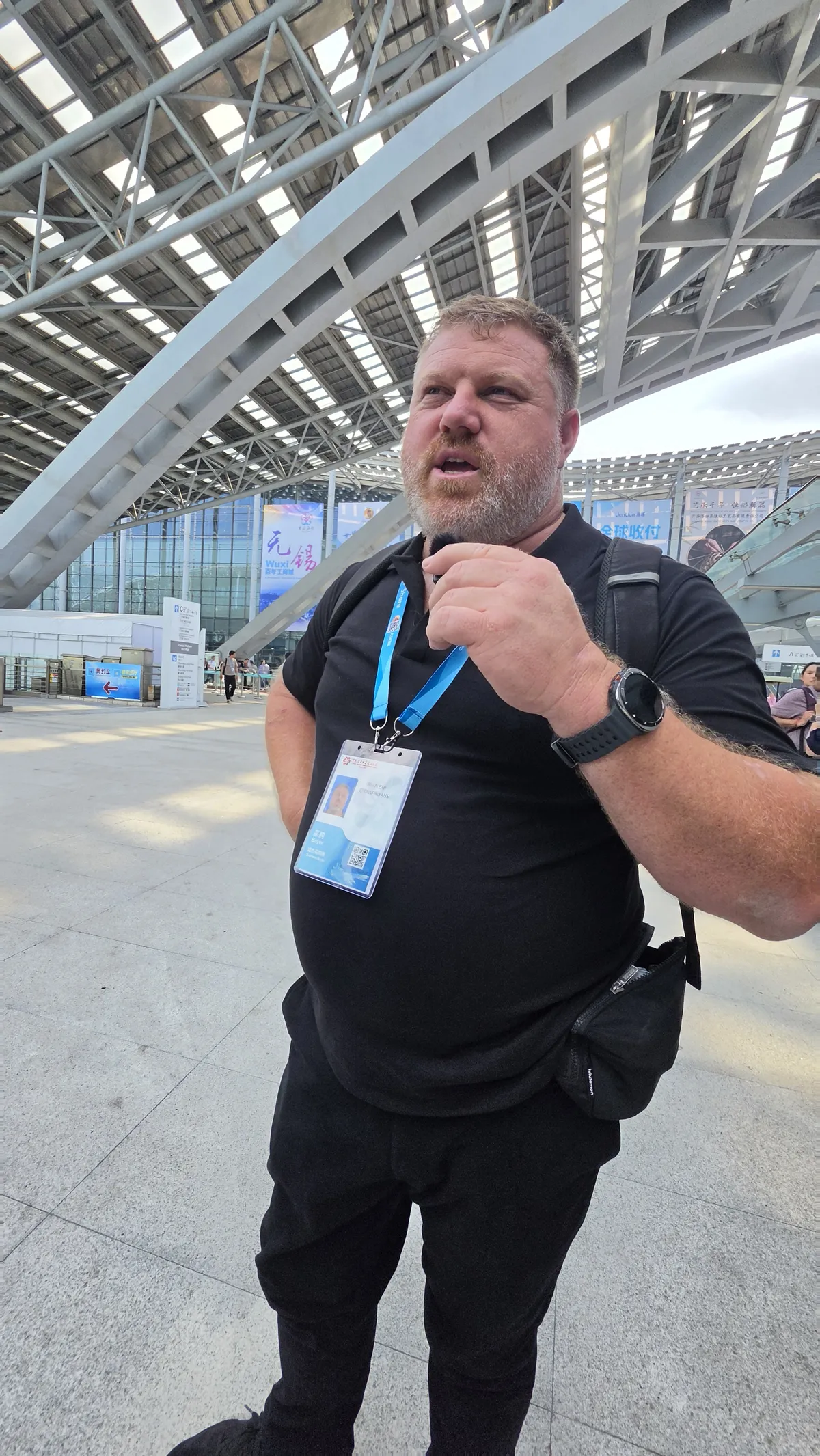
The remote version works better than people expect. Someone on the ground walks your shortlist, video-calls you live from the booth so you can ask your own questions through them, handles the samples, and consolidates them into one shipment home instead of four separate courier bills.
You lose the serendipity of walking the floor yourself. You keep the airfare, the week, and most of the value.
It is one of the things we do for clients — with the caveat that it works far better when you have done the shortlisting homework first. Sending someone to a fair with “find me something good” is not a brief.
The follow-up is the whole thing
Most trade fair value is destroyed in the two weeks after the fair, not during it.
Contact every shortlisted supplier within 72 hours, while they still remember the conversation. Ask for a formal quotation with an Incoterm attached — FOB Shenzhen and EXW factory are very different numbers, and a quote without one is not a quote.
Then order samples from your top three. Not your top one. The one you liked best at the booth is not reliably the one whose samples arrive on time and to spec, and finding that out costs you two weeks now instead of a container later.
Coming up
Pet Fair Asia is on our calendar, and we run trade show support for Australian buyers who want the shortlist walked without the flights. If your category has a fair coming up, it is worth planning against it now rather than three weeks out.
ExploreChina Pro attends trade fairs on behalf of Australian buyers — shortlisting, live video walkthroughs from the floor, sample consolidation and follow-up. Book a free 30-minute chat.