
How to tell a real factory from a trading company — and when you actually want the trading company
Every sourcing guide tells you to “go direct to the factory.” Most of them do not tell you how to check, and none of them tell you that sometimes the trading company is the better partner.
Let us do both.
Why it matters
A trading company sits between you and the manufacturer. That layer costs you margin — typically somewhere between 3% and 15% — and it costs you information. When something goes wrong on the production line, you hear about it late, through a translator, from someone who was not there.
A factory owns the line. Faster answers, better prices on volume, and real control over specification.
Six checks that actually work
1. Ask for the business licence and read it. Every Chinese company has one. It states the registered scope of business (经营范围). A manufacturer’s scope will include production or processing terms; a pure trading company’s will read as wholesale, import and export, or sales. This document takes thirty seconds to request and tells you more than an hour on the phone.
2. Cross-check the name against the product. A supplier called “Shenzhen XX Electronics Technology” quoting you on pet beds, kitchenware and phone cases is not making all three. Very few real factories have a broad catalogue — deep and narrow is the manufacturing signature.
3. Ask for a video walkthrough, unscripted. Not the polished factory tour video from 2019. Ask them to walk the line on a video call, right now, and to show your product being made. A real factory will grumble and do it. A trading company will produce reasons.
4. Check where the export documents come from. If the invoice comes from one entity and the export declaration from another, there is a layer you have not been told about.
5. Ask about their MOQ and their tooling. Factories talk fluently about mould costs, cycle times, cavity counts and what a tooling change would take. Trading companies answer these questions vaguely or promise to “check with production.”
6. Ask what they cannot do. This is the best question in sourcing. A real manufacturer will tell you plainly: “we cannot do that finish”, “that tolerance needs a different process”, “below 2,000 units the tooling does not amortise.” A reseller says yes to everything, because saying yes costs them nothing until it is your problem.
When the trading company is the right call
Now the part the sourcing blogs skip.
Small orders. If you need 200 units, most real factories will not take you seriously. A trading company aggregating orders across buyers can get you made what a factory would not bother quoting.
Multi-product orders. If you want twelve SKUs across four product types in one container, you need someone consolidating. That someone is a trading company, and paying them for it is rational.
No China-side capability. If nobody on your team speaks Mandarin, has been to a factory, or can read a Chinese contract, going “direct” often means going direct into problems you cannot see. A good trading partner is buying you competence, not just goods.
First order in a new category. Use the trading company to learn the category and validate demand. Go direct on reorder, once you know the product sells and you know what “good” looks like.
The honest framing: you are not choosing between paying a margin and not paying one. You are choosing who does the work. If you do not do it, someone does, and they charge for it.
The one thing to never skip
Whichever you choose — inspect before payment of the balance, and inspect before the goods ship. Not after they land in Australia, where your only remaining options are expensive.
An independent pre-shipment inspection costs a few hundred dollars. A container of goods that do not meet spec costs you the container.
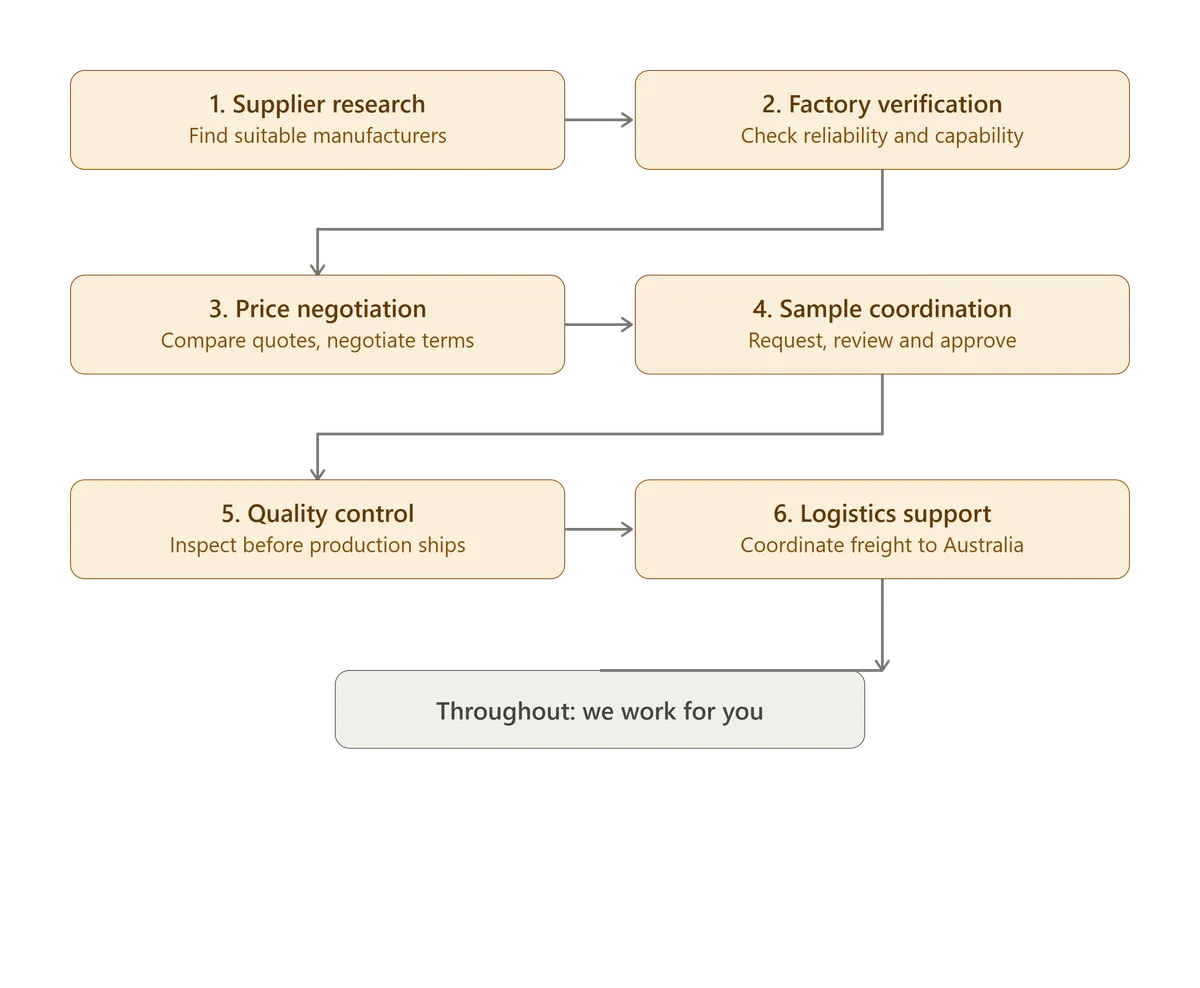
ExploreChina Pro works for the buyer, not the factory — supplier vetting, independent pre-shipment inspection and freight, handled from Adelaide with a team on the ground in China. Book a free 30-minute chat.